Cubism – Centre Pompidou
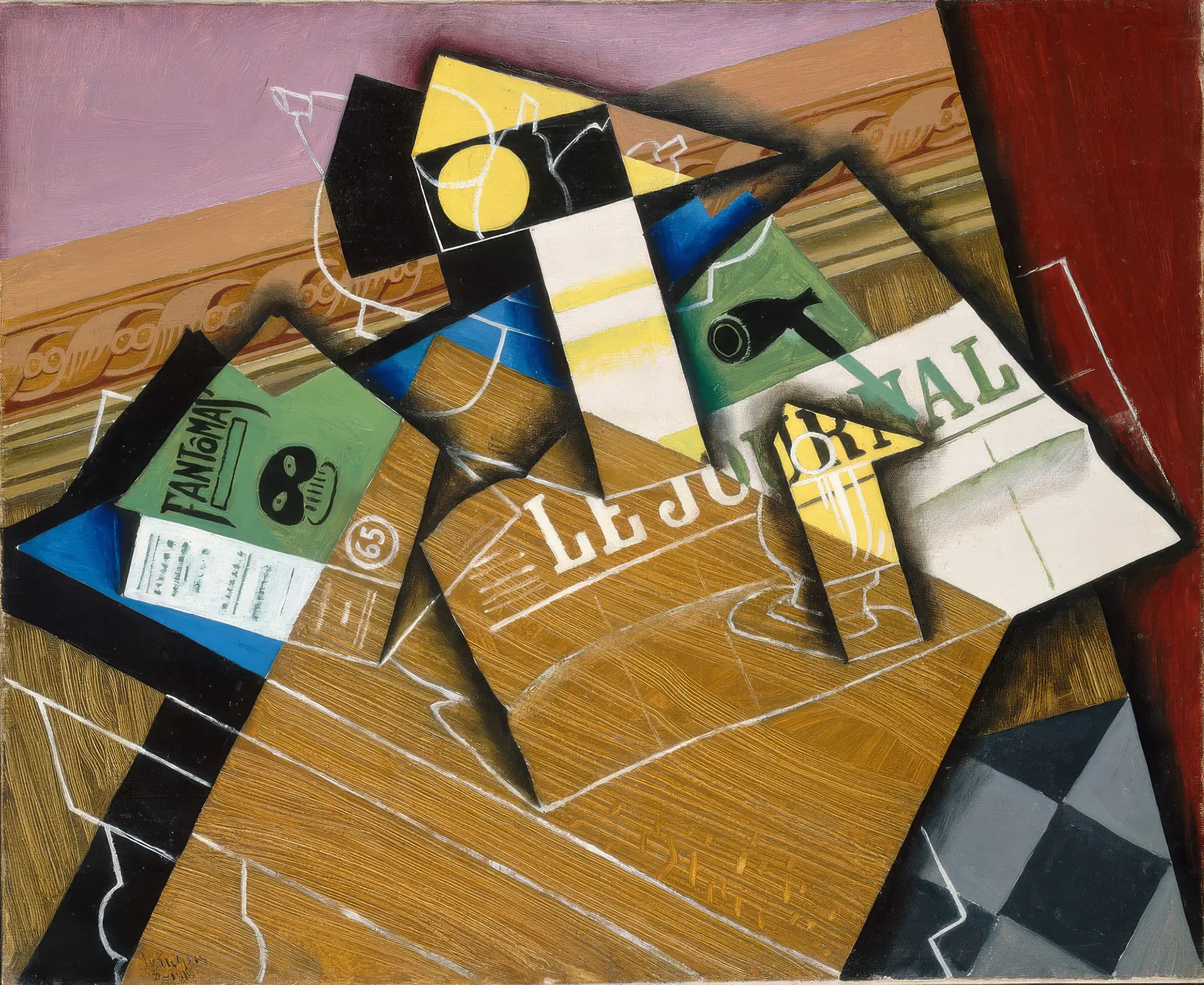
For the first time in France since 1953, the Centre Pompidou is devoting an exhibition to Cubism, offering a broad panorama of the movement’s history in Paris between 1907 and 1917.
The originality of the project lies in broadening the traditional focus on the movement’s leading figures, Georges Braque, Juan Gris, Fernand Léger and Pablo Picasso, to include secondary Cubists such as Gleizes and Metzinger, and more independent ones such as Robert and Sonia Delaunay, Marcel Duchamp and Francis Picabia, who exhibited at the official Paris Salons while the pioneers reserved their experimental work for a single, unknown young dealer, Daniel-Henry Kahnweiler.
Featuring three hundred works and documents reflecting the movement’s influence, the exhibition is arranged chronologically in fourteen chapters, highlighting masterpieces such as Picasso’s Portrait of Gertrude Stein (1905–1906) and his portraits of Ambroise Vollard (1909) and Daniel-Henry Kahnweiler (1910), as well as groups of paintings and sculptures never before brought together. They showcase the eventful evolution of Cubism, tracing it back to its primitivist sources (with tribal sculptures collected by the artists) and to the Cubists’ fascination with Gauguin and Cézanne. They reflect the movement’s formal progression, from an initial Cézannian phase (including Picasso’s exceptional still life Bread and Fruit Dish on a Table, 1909) to a hermetic analytical transcription (1910–1912), which was then transformed into a more synthetic version (1913–1917) marking the return of representation and colour.
The most revolutionary aspect of Cubism – the invention of papiers collés, collages and constructions by Braque, Picasso, Gris and Henri Laurens – is represented by major icons of 20th-century art, such as Picasso’s Still Life with Chair Caning (1912) and his Guitar in sheet metal and wire (1914). Other aspects illustrate the importance and prestige of the Cubist constellation: its links with literature are explored in a room dedicated to critics and poets, embodied by the most striking portraits of Max Jacob and Apollinaire by Henri Rousseau (known as Le Douanier) and Marie Laurencin, Kahnweiler’s editions of Cubist books, the collaboration between the Delaunays and Blaise Cendrars on La Prose du Transsibérien in 1913, and more. The tragedy of the Great War (1914–1918), which mobilised or exiled the artists and their supporters, is traced through works by artists who served at the front (Raymond Duchamp-Villon, Fernand Léger) or who remained behind the lines as foreigners (Pablo Picasso, Playing Cards, Glasses, Bottle of Rum, “Vive la France”, 1914–1915), bearing witness to the inevitable decline of a movement struck by history (Marc Chagall, The Cemetery Gates, 1917). The final section reflects both the revival of survivors such as Braque (The Musician, 1917–1918) and the influence Cubism exerted on its contemporaries, such as Henri Matisse (French Window at Collioure, 1914), on its abstract heirs (Piet Mondrian, Composition No. IV, 1914; Kazimir Malevich, Black Cross, 1915) and on those who challenged it (Marcel Duchamp, Bicycle Wheel, 1913/1964), all indebted to the Cubist revolution.
DURATION : October 17, 2018 to February 25, 2019.
LOCATION : Centre Pompidou
MORE INFO : click here
Faculty: Fine Arts