
The conversation pit is back
Most living rooms are arranged around a television. From the late fifties to the seventies, some architects tried something else: they lowered part of the floor and lined the recess with built-in seating. The sunken lounge, or conversation pit, is now getting a second look.
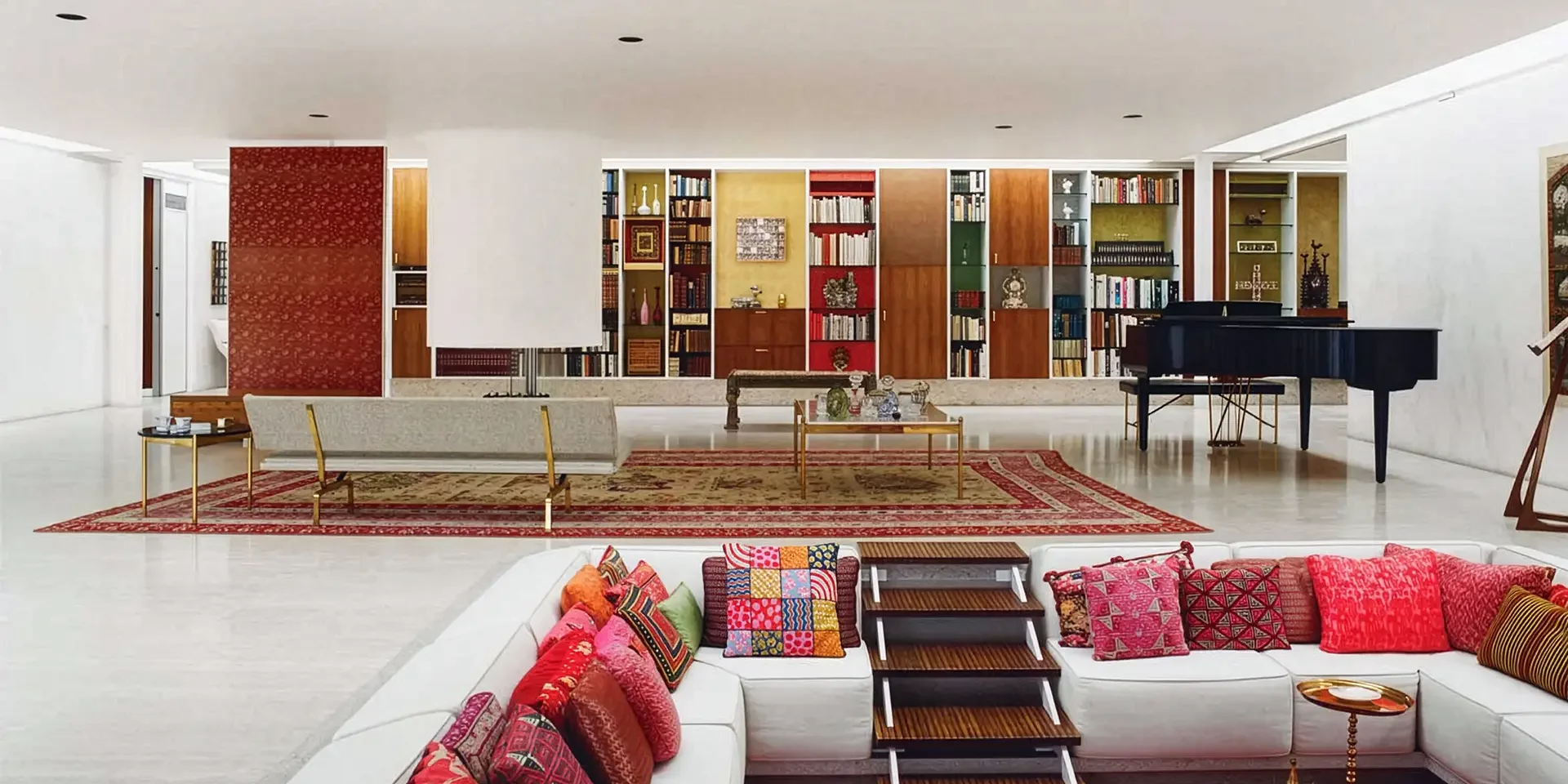
The idea is simple. One area of the room drops a step or two below the rest, and banquettes run around its edge. The best-known example is the Miller House in Columbus, Indiana, completed in 1957 by Eero Saarinen with interiors by Alexander Girard. Its square pit sits in the middle of an open living area, lined with cushions. Saarinen and his contemporaries wanted a way out of the flat, boxy plan, but the bigger effect was social. Sitting below floor level changes your eye line. People face each other and sit closer together than they would on a sofa and two armchairs, and the talk gets easier.
In a small city apartment, where every square metre counts, cutting into the floor sounds extravagant, and often it is. The appeal is still easy to understand. Many of us would like the living room to be somewhere we talk again, and less of a home cinema.
A pit also solves a design problem. In a large open-plan loft it marks out a zone without a single wall or partition. It reads as an island within the room, and the contrast works in very different settings, whether against the mouldings of a Haussmann apartment or the bare concrete of an industrial conversion.
If you were building one today, materials would do most of the work. Corduroy or velvet, raw oak and thick wool all suit the enclosed, sheltered feel. The seating stops being furniture you choose afterwards and becomes part of the architecture, a single built element that anchors the whole room.
Nostalgia explains some of the revival, but not all of it. A conversation pit is a room designed for slowing down, with a place set aside for nothing more than sitting together and talking.
SOURCES:
Faculty: Interior Design
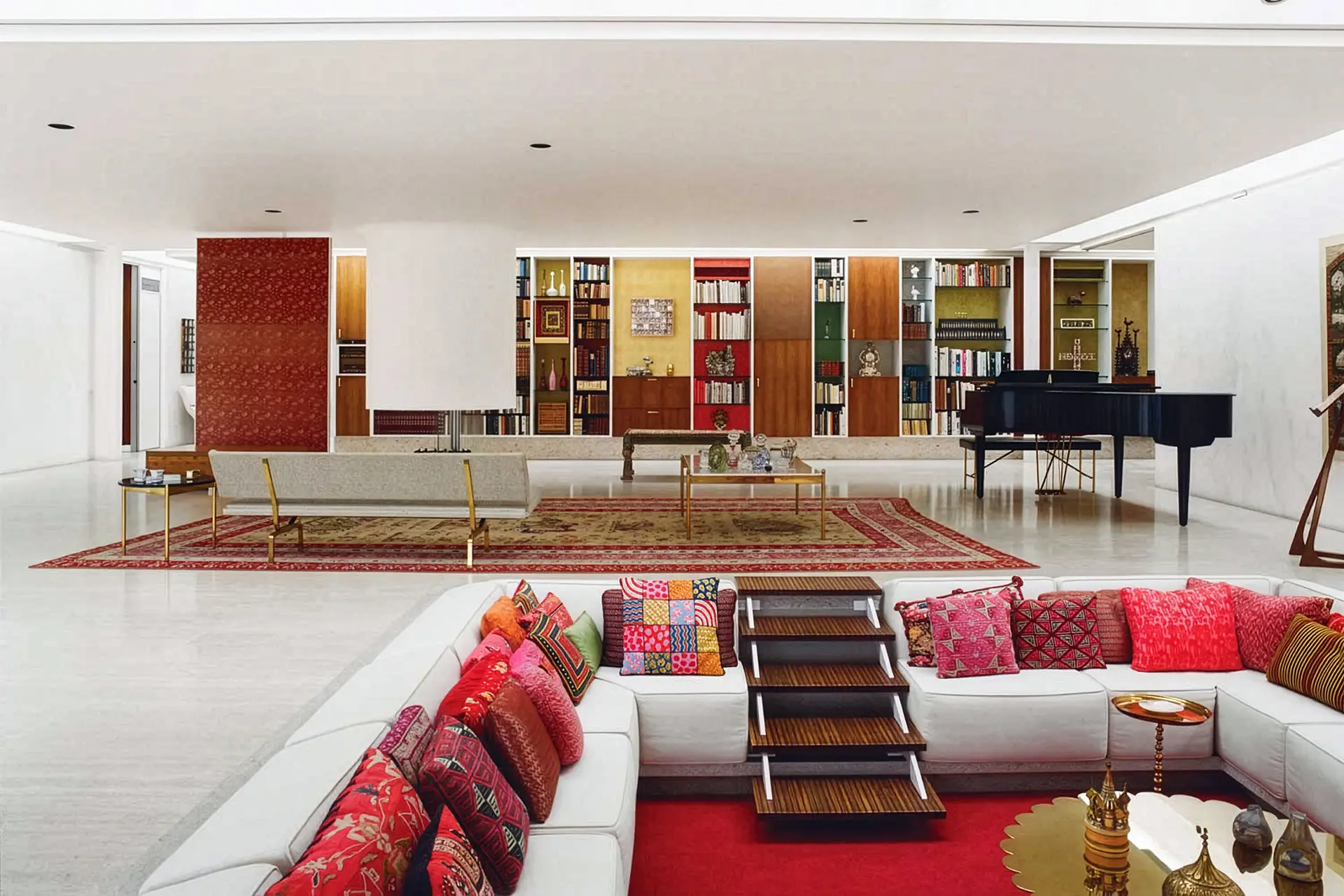
The Miller House by Eero Saarinen